
Hormonal changes during perimenopause and menopause can affect much more than your periods. Hot flushes, night sweats, disrupted sleep, changes in mood and energy, and other physical symptoms can make this stage of life challenging.
In Traditional Chinese Medicine (TCM), perimenopause and menopause are viewed as natural transitions, during which the body gradually adapts to changing internal balance. These changes are described in terms of Kidney Yin and Yang, which are traditionally associated with temperature regulation, sleep, energy and emotional wellbeing. Acupuncture aims to support balance and overall wellbeing during this transition, working with your individual pattern of symptoms.
Not sure where to start? Take our free 2-minute health assessment for personalised recommendations. When you’re ready, book your first appointment online. This includes a full consultation and treatment, looking at your symptoms, lifestyle and health history.
At The Get Well Clinics acupuncture is affordable at £42 a session, so you don’t have to navigate symptoms alone.
★★★★★
“I’ve always been someone who manages things. I finally feel like I have some tools to manage this too.”

★★★★★
“Slept like a baby after my first session and my mind has been steadily slowing down over the course of my treatments.” Kate
★★★★★
“Affordable acupuncture with a highly skilled team. The community style setting is comfortable and welcoming.”
★★★★★
“I can’t recommend this clinic enough for all your acupuncture needs.” Camilla
Individual patient experiences. Results vary.
What Happens During Menopause and Perimenopause?
As activity in the ovaries decreases, oestrogen and progesterone levels fall and periods stop. Your body no longer needs the hormone levels it once did, but the adjustment can be uncomfortable, and for some women it goes on for years.
Perimenopause is the run-up to that, and can begin years earlier, with changes to your cycle, mood and sleep long before menopause itself.
What Causes It
Falling oestrogen affects blood vessel regulation, contributing to hot flushes and night sweats. Broken sleep compounds this and is closely linked to low mood during menopause (NICE NG23; NHS).
Menopause is shaped by more than hormones. Life circumstances, including caring responsibilities, work pressure and social support, influence how difficult the transition feels (Avis NE, et al.), which is why focusing on one hormone may miss the bigger picture.
You May Be Feeling / Experiencing
- Hot flushes and night sweats
- Disrupted sleep, often broken by sweating
- Mood changes, low mood and anxiety
- Brain fog, forgetfulness and poor concentration
- Joint and muscle aches
- Reduced libido, vaginal dryness and discomfort during sex
- Palpitations, headaches and urinary changes
Please speak to your GP about your options, including HRT, and about any bleeding after your periods have stopped, which should always be checked.
Acupuncture works alongside medical care, not instead of it, and we do not advise on changing prescribed treatment.
Source: NHS, Menopause and perimenopause symptoms; NICE guideline NG23.
How Acupuncture Supports Perimenopause and Menopause
Hot flushes, night sweats, poor sleep, brain fog, mood changes, anxiety and joint pain all affect how you feel day to day. When several arrive together, it is hard to know where to start.
We look at the bigger picture rather than treating one symptom in isolation, taking a full health history including pulse and tongue diagnosis, and considering your sleep, stress, diet and lifestyle. That helps us understand your pattern and build a plan around you.
We see the results in clinic and the science is catching up.
A meta-analysis found acupuncture improved menopause-related symptoms and quality of life in women in natural menopause (Chiu HY, et al. Menopause. 2015;22(2):234-244), and for hot flushes a randomised trial found reduced frequency compared with usual care lasting six months (Avis NE, et al. 2016).
A Cochrane review against sham found no clear difference (Dodin S, et al. 2013), reflecting how hard acupuncture is to pin down in trials, since a convincing placebo needle is close to impossible to design. As to why it works, researchers point to several mechanisms:
- Calming the nervous system: disrupted sleep and hormonal change keep the nervous system in alert mode. Acupuncture is aimed at the parasympathetic “rest and restore” side of that system, and a meta-analysis of 9 randomised trials found it affected heart-rate variability and parasympathetic activity (Hamvas et al., 2023).
- Improving circulation: a systematic review found acupuncture increased local blood flow in muscle and skin (Kim et al., 2016), one of its more measurable effects.
- Releasing endorphins: research points to the release of endogenous opioid peptides, including endorphins, the body’s own pain-relieving and feel-good chemicals (Han, Neuroscience Letters, 2004).
- Reducing anxiety symptoms: a 2021 systematic review and meta-analysis of randomised controlled trials found
acupuncture reduced anxiety symptoms, and a 2026 review reported the same compared with sham treatment or usual care (Annals of General Psychiatry. 2021;20(1):9; Jang et al., Journal of Clinical Psychology, 2026). - Acting on brain chemistry: research points to the release of endorphins, the body’s own feel-good chemicals, and has examined the brain regions handling pain and stress alongside the neurotransmitters that affect mood, including serotonin, noradrenaline and dopamine (Han, Neuroscience Letters, 2004). These are proposed mechanisms rather than settled conclusions.
- Works alongside HRT: acupuncture is not an alternative to HRT. The aim is support while your body adjusts (NICE guideline NG23 sets out the medical options).
Individual results vary. These findings are not a guarantee of outcome for every patient.

Lasting Changes
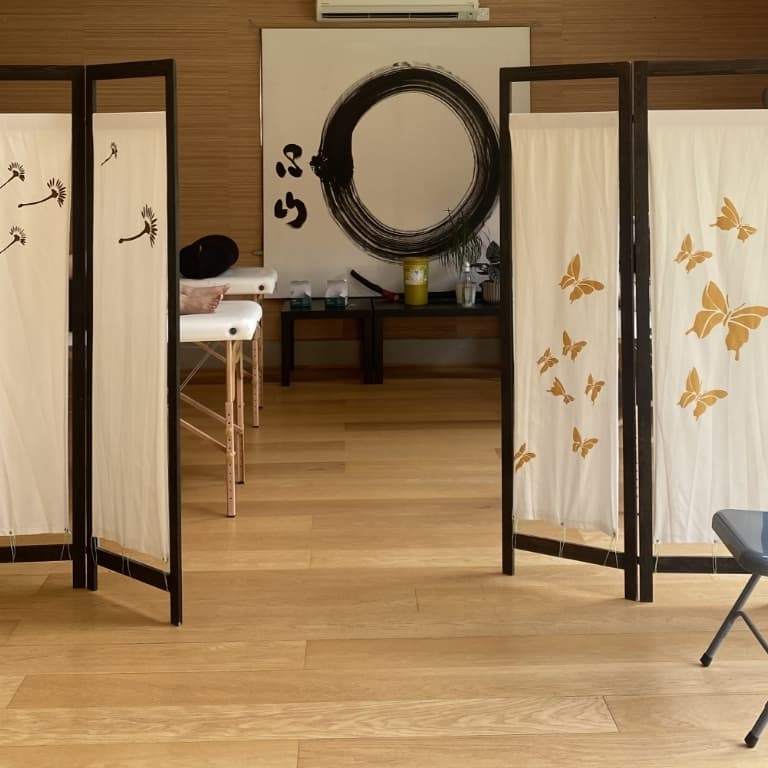
Lasting change often comes from small shifts alongside treatment, so we also offer support through:
- Diet & lifestyle coaching: removing food triggers, improving sleep, and moving your body more, at a pace that works for you.
- Stress-management tools: easy breathing exercises, mindfulness, and relaxation techniques you can use daily without feeling overwhelmed.

Flavio Cabral
3 months ago
The service I received was unhurried, kind, personal, as well very educative from both treatments I had on full body and head only (ear). I strongly recommend it.

Mdm Pleguebyrne
3 months ago
I first came to the Gate Well Clinic last year, and it was a fantastic experience. I'm now back again to help get myself back on the healthy path I was on before.
I feel that we live in a very different world compared to a couple of generations ago. Life moves at such fast pace, and much of our food has been depleted of its nutrients or replaced with ultra-processed alternatives, making it increasingly difficult to maintain good health.
Coming back to the clinic is helping me regain control of my health. The acupuncture treatment with George, together with the guidance and natural supplements he recommends, have given me the support I need to feel better, more balanced, and more in tune with my body.
I'm truly grateful for the care, knowledge, and support that George and the whole team provide. I would highly recommend the Gate Well Clinic to anyone looking to take a more natural approach to improving their overall health and well-being.

Tom Tom C
5 months ago
I have been seen by the fantastic Luke Warburton for a year for acupuncture & bodywork. He combines both skills in treatment at the get well clinics in Paddington. His knowledge really helps me maintain my health conditions like Fibromyalgia and osteoarthritis and anxiety. The get well clinics is my go to comfort zone for well being. Tom

Vincent Crooks
5 months ago
It's so good to have a place like the getwell clinic which for me is acceptable,affordable, clean and pleasant, with experience and professional practioners ,with the knowledge to read and diagnose ailments,
Vincent Crooks.

Emma Williamson
6 months ago
Marion is an excellent acupuncture therapist - I have really benefited from her treatment and highly recommend her.

Daria
8 months ago
Very good services at affordable prices. Acupuncture treatments have been helping me to balance my energy - either to bring it up or down depending on how I was feeling. Sheree is very helpful.

Fiona Blakeman
9 months ago
I couldn’t recommend this highly enough and I’m very grateful that this service is available in my local community. I’ve had a lot of experience receiving acupuncture, and despite the heavily discounted cost, the level of care, attention, and quality of treatment is exceptional.
The initial consultation is carried out privately, with treatments taking place alongside other patients. The setting is calm and peaceful, and I felt very safe and supported by both the practitioner and the environment overall.

Lucy Brook
11 months ago
This was a first time trying acupuncture, in a welcoming and tranquil space that's affordable to have professional treatment in a community clinic. I have several issues with my spine and I came initially with my sciatica pain at a 10 so severe for months struggling to walk and cope with daily functioning using mobility aids. I felt a major difference in pain relief after the first treatment and by the third session it has drastically reduced to a 2 and sometimes no pain on good days.
George is excellent and I feel so thankful, his knowledge and recommendations has been helpful and I've slowly been implementing. I come away from the sessions feeling relaxed and able to sleep better. I look forward to continuing my journey of pain relief, health and wellbeing, plus getting some normality slowly back in my daily life and functioning.

Elisa R
11 months ago
I went for several sessions this year to help with an extra heartbeat caused by stress. I also changed my lifestyle slightly, but acupuncture definitely made a difference. It takes time and trusting the process, and since I’m not used to slowing down, having this dedicated ‘me time’ was exactly what I needed.
John and Marion are knowledgeable, kind, and genuinely take the time to listen. I love how welcoming the community clinic is, and I always felt in very good hands.
Thank you to both of them, I’d definitely recommend it to anyone looking for support with stress or overall well-being.

Lucia Krupova
6 months ago
If you are preparing for IVF or struggling with back pain, you need to book an appointment with John.
I was a little bit worried about sharing room with other people but the place is incredibly peaceful which is exactly what you need when dealing with the stress of fertility treatments.
I came in for fertility support and a bad back, and I am amazed at how quickly it worked.
It only took a few sessions for my back pain to disappear entirely, and my periods are now perfectly on schedule. It has given me so much peace of mind and physical comfort heading into my IVF cycle.

Camilla Cooper
8 months ago
Get Well Community Acupuncture clinic is absolutely incredible. I’ve had really healing and helpful treatments with both Phil and Luke who are both exceptional & extremely caring practitioners. I can’t recommend this clinic enough for all your Community Acupuncture needs.

Maria del Mar Arranz Martin
11 months ago
Excellent service and professionals

John Watson
12 months ago
Very sympathetic and thoughtful treatment from Marion. I like the no-nonsense (and affordable) approach of having a communal treatment room. You still get plenty of attention and then lie and relax with the needles in whilst other people are attended to.

Vicki Zhang
1 year ago
Marion is super attentive and skilful - would highly recommend her to anyone considering acupuncture.

Sehr schön
2 years ago
I landed at Paddington location in Marion Rolling’s magical hands at the end of Jan 25.
I had high anxiety, heart palpitations and frequent migraines. I was always on high alert expecting a catastrophe at every corner and on the verge of tears at all time.
After a few Acupuncture sessions with Marion, my anxiety is manageable , I have more energy and I go for days without my previous symptoms. Also have not had a migraine since then.
I’m looking forward to seeing Marion a few more times this spring to help me with my hayfever.
Can’t recommend them enough. Thank you 🙏

Isabel Pitcaithly
2 years ago
Recently I attended The Get Well Clinic in Paddington where I had 3 accupuncture sessions a week apart with the very knowledgeable Marion Rollings. I did my homework before choosing Marion who has trained extensively including 7 years in China. I was impressed with how she managed to remember all I had told her in pre treatment forms and lying there relaxing with the needles in place ( completely painless) I could tell she remembered all about her other patients. I felt very relaxed and well cared for.
I had a problem with my ankle/foot which was very debilitating and this has greatly improved. I am so pleased as I was afraid to go out in case I suddenly couldn't walk any more. I no longer have this problem.
I was also concerned about headaches which seemed to take over my life. I can honestly say since the first treatment up to now several weeks down the line I have only had one headache which for me is amazing !!
To anyone considering a treatment with Marion go ahead. You will not be disappointed !!!
I plan on further treatments for my back when I have finished work in the garden. Isabel 76
Common Questions Answered
Yes. We work alongside HRT, not instead of it, because most women need more than one tool.
Many patients report relief from disrupted sleep and night sweats after a course of treatment.
We take these symptoms seriously, not just the physical ones, as part of a whole-body approach to menopause.
Acupuncture works by building change slowly over time, small shifts that add up, rather than one big fix. Everyone is different, but most patients start to notice a difference after several regular sessions rather than a single visit.
Why Choose Our Low Cost Acupuncture Clinics in London?
Expert
Our highly qualified acupuncturists, without the private clinic price tag.
Whole-body approach
We use traditional acupuncture diagnostic principles to look at your symptoms in the context of your whole health, not just the area that hurts
Convenient locations
Our clinics in Camberwell and Paddington are close to bus, train, and Tube lines, so getting here is simple.
Acupuncture Articles
You don’t need to understand how acupuncture works for it to work. But if you’re curious about the science, we’ve linked some articles below, with more on Traditional Chinese Medicine in our Articles section.
Acupuncture can be difficult to study. Researchers use sham acupuncture as a control, with needles placed away from recognised acupuncture points, but these “fake” points can still have an effect. Many studies are also small because research funding is limited. This means some conditions have not yet been studied at the scale needed for firm conclusions. That is not the same as acupuncture being tested and failing. Where high-quality, large-scale research has been carried out, the evidence is much stronger.
Acupuncture alongside HRT
NICE guideline NG23, Menopause: diagnosis and management. 2015, updated 2019. Covers HRT and non-hormonal options.
Managing Night Sweats and Sleep Disruption
Support for one of menopause’s most exhausting symptoms. Chiu HY, Hsieh YJ, Tsai PS. Acupuncture to Reduce Sleep Disturbances in Perimenopausal and Postmenopausal Women: A Systematic Review and Meta-analysis. Obstetrics & Gynecology. 2016;127(3):507–515.
Brain Fog and Perimenopause
Chiu HY, Pan CH, Shyu YK, Han BC, Tsai PS. Effects of acupuncture on menopause-related symptoms and quality of life in women on natural menopause: a meta-analysis of randomized controlled trials. Menopause. 2015;22(2):234-244.